

This article is all about detraining, and not overtraining, so I want to make that very clear. Overtraining is very real, however, at the other end of the spectrum, there is detraining, this is called training cessation.
As you’ve noticed throughout all of my health and fitness articles, I’m really passionate, but also slightly irritated by lack of inaction, but today, in this article, I will address the difference between laziness and detraining.
What is Training Cessation?

Detraining refers to diminishing physiological capacity as training becomes infrequent and ceases altogether due to an insufficient training stimulus. Detraining begins to occur and performance gains diminish significantly once a frequent exerciser has not exercised for 2 to 3 weeks.
During the first few weeks of detraining, physical fitness and specific performance metrics, like strength and endurance, decline noticeably. Older adults may experience more rapid losses, but the time taken to regain fitness is usually shorter than the time spent detraining.
Training cessation refers to the complete or temporary stoppage of an exercise or training regimen. This can occur voluntarily (such as taking a planned break) or involuntarily (due to injury, illness, or external factors).
You see this happens with athletes all the time, when they stop their exercising, their performance goes down significantly. Heck when I was younger, I was a pole vaulter in track, I’ll be the one to admit this to you, I went a little soft because I didn’t like doing handstand walks.
But that’s really what I did to myself, I called myself out and said, “Adam, get your shit together, you can be better.” Constant self-improvement to reach my fitness level higher and higher.
Then I realized in my mid-twenties that I had to make this a lifestyle so I never miss again, like I did in high school when I neglected doing handstand walks to prepare for a track meet and pole vaulting.
This is what detraining does, it fucks up everything when you have too much recovery. Your performance suffers. If you are an athlete that came to my article, then here’s what I have to say to you…
Go get in your workout. I don’t care if you have to say no to sex from your woman to get it in, just get that workout done because your performance will be well worth getting in that workout!
The Science of Detraining: Physiological Changes and Muscle Memory

Detraining is a complex process that involves various physiological changes in the body. Training-induced adaptations are physical changes resulting from consistent exercise, which can be lost due to a lack of sufficient training stimulus. When you stop or reduce your training, your body undergoes a series of adaptations to conserve energy and maintain homeostasis.
One of the primary changes is a decrease in muscle mass and strength. This happens because your muscle protein synthesis drops, and muscle protein breakdown increases. It’s like your body is saying, “Hey, we don’t need all this muscle if we’re not using it.”
But that’s not all. Detraining can also lead to a decrease in blood volume, which can seriously impair your endurance performance. Less blood volume means less oxygen and nutrients getting to your muscles, making it harder to sustain aerobic exercise training.
Now, let’s talk about muscle memory. This is where things get interesting. Muscle memory is the phenomenon where your body remembers the movements and patterns of exercise, even after a period of detraining.
This is due to the retention of myonuclei, the control centers of muscle fibers. These myonuclei stick around, allowing for faster muscle growth and strength gains when you get back to training. So, even if you take a break, your body is ready to bounce back quicker than you might think.
The Consequences of Insufficient Training Stimulus

Insufficient training stimulus can have significant consequences for endurance athletes, particularly those who engage in aerobic exercise training. When you slack off and reduce your training volume or intensity, you’re setting yourself up for a partial or complete loss of those hard-earned training-induced physiological adaptations. This means your endurance performance takes a nose-dive, and you start losing muscle mass and muscular endurance.
Research has shown that even a few weeks of reduced training can result in significant losses in aerobic capacity, muscle fibers, and blood volume.
For instance, a study published in the Journal of Applied Physiology found that endurance athletes who cut their training volume by 50% for just 4 weeks experienced a 12% decline in VO2max and a 10% drop in muscle mass. That’s a massive hit to your performance, my friend.
Furthermore, insufficient training stimulus can also lead to a decrease in muscle fibers, especially those type I fibers that are crucial for endurance activities.
This results in a reduction in muscular endurance, making it harder for you to perform at your peak. So, if you think you can coast by with minimal effort, think again. Your body needs consistent training to maintain those performance adaptations.
Leads You Down a Dark Path

“Small minded people blame others. Average people blame themselves. The wise will see all blame as foolishness.”
-Epictetus
You know I’m all about mental health as I’ve always promoted having a good state of mind since the beginnings of my blog.
What you don’t realize about detraining is this can lead you down a dark path. I’ve been down that road my friend.
Every time I went down that road, I simply had the pussies mindset. Let’s face it, strong men will always blame themselves. Weak men will blame other’s. Always look within my friend.
You know this as I am really big on having a positive, resourceful state of mind. However, we all know life hits us in the face. Shit happens, you might be running late to work, then you get out of work and you are ready for bed.
The next thing you know, you start saying to yourself, “Damn I really need to hit the gym.”
In a way that’s your fault. You gotta be responsible for you my friend.
I’m not going to always say “Be positive.” I know that some people don’t like that comment.
Because I also understand that life throws everyone curveballs. Let’s say you go through a breakup, I still encourage working out.
Self-sabotage is in fact a big reason no men have masculine energy. So I encourage you to snap yourself out of it.
Learn How To Cook and Bake Food for Aerobic Exercise Training

Detraining can and will cause lack of motivation, and quite frankly, I have mixed feelings on motivation.
On one end, it can be good when I’m training a client. On the other end, I understand that it’s not enough. Why is that not enough? It’s because you gotta focus on what you eat.
It’s not just the hour of working out, it’s the next 23 hours and how you use that time. It’s comfort and it’s easy to sit around.
I encourage you to learn how to cook and at least try this avocado brownie recipe as its better than ordering fucking gross Burger King, McDonalds, or Wendys.
Quite frankly, I recently was in touch with one of my clients who got Burger King and he said he got sick super fucking bad.
He was out for 4 days in a row. This is why I never go to these places, it’s literally poison.
If you are a new reader to my blog, understand that bottom-of-the-barrel fast food chains is a common enemy I touch upon frequently.
Detraining Affects on Endurance Athletes
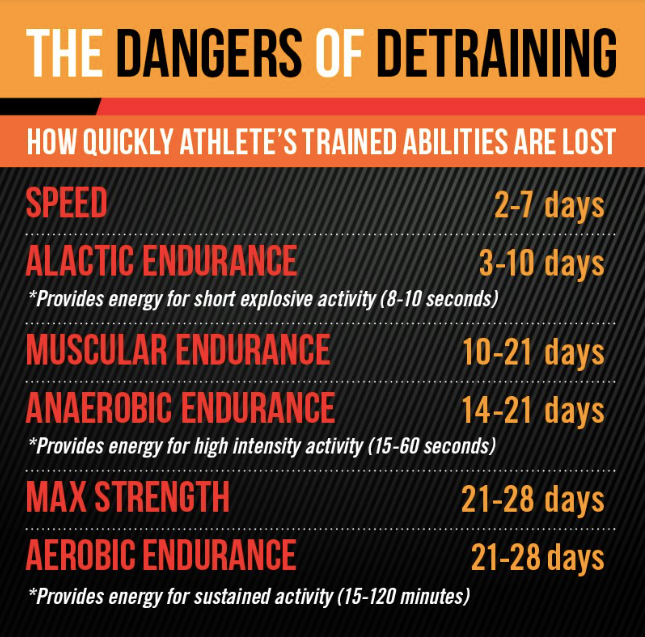 Here’s where I gotta give full credit to True Athlete Performance.
If you are an athlete and you’ve come across my blog, I encourage you to reconsider how much you’ve declined physical activity.
I understand life happens, but just look at how easily you can lose performance and end up with less muscle mass.
This should open up your eyes as to why I’m so fucking passionately annoyed with the average person, even if you are an athlete.
Look man, I’ve called myself out, so I will call you out. What is your true reasoning for stopping exercise?
Related Article: Fixed Mindset vs Growth Mindset
Are you not an athlete anymore? I get that my friend, I once ran track, you gotta ask yourself why you’ve stopped.
Question yourself, get down to the root of the problem. Put all of your thoughts in a journal.
Then and only then can you get true clarity as to why you aren’t going to the gym anymore.
Ask yourself the following:
- Am I demotivated because of my current financial status?
- Am I demotivated because I cannot play sports due to injury?
- Am I demotivated because I can’t do the exercises I used to do?
This is a mindset hack called Limbing in NLP. Requires a full article. Find the belief behind the belief until you get down to the root of it.
This is something I still do till this day when I notice my energy levels decline.
I’m here to give you tactical strategies my friend. Sometimes you gotta have honest talks with yourself.
By now you should know, it’s not about motivation. It’s really about making fitness a lifestyle.
It’s about persistently catching yourself having days when you think working out is impossible, but it is in fact possible. How can I make such a big statement?
It’s because unless you have a serious injury where you’re unable to workout at all, the only thing holding you back is yourself.
Swimmers Lost Muscle Mass from Detraining

There were up to 8 swimmers that lost their skeletal muscle in their shoulders according to this study here. [R]
This loss of muscle includes a significant decline in muscular endurance, which is crucial for swimmers.
That’s sad isn’t it? Honestly, you should see by now that detraining is the opposite end of overtraining. Here’s the effects of training cessation:
- Short-term cessation (days to weeks): Minor reductions in performance, endurance, and muscle activation.
- Long-term cessation (weeks to months): Significant loss of strength, muscle mass (atrophy), cardiovascular fitness, and neuromuscular adaptations.
- Extended cessation (months to years): Reversal of most training adaptations, making it difficult to regain previous fitness levels quickly.
I’d rather have you get in a good run than just sit around watching TV and Netlflix.
And don’t use the weather (oh it’s cold outside) as an excuse.
It’s like dude, even though if you think you have limitations, most of that is shitty limiting beliefs.
“I can’t run it’s too hard on my joints Adam.”
“I can’t swim, it’s really hard.”
This is where I come through to you and say, “Bro, stop being weak and lazy.”
You can lead a horse to water but you can’t make it drink. Choosing the easy way out by coming up with excuses is weakness.
Overcoming Detraining: Strategies for Endurance Athletes

Endurance athletes, listen up! If you want to overcome detraining, you need to incorporate specific strategies into your training program. One of the most effective ways is to maintain a consistent training volume, even if it’s reduced. This helps to minimize the loss of endurance performance and muscle mass. Think of it as keeping the engine running, even if it’s at a lower gear.
Another powerful tool in your arsenal is high-intensity interval training (HIIT). Incorporating HIIT into your program can help maintain cardiovascular fitness and muscle endurance. It’s like giving your body a wake-up call, reminding it that it still needs to perform.
Strength training is another crucial component. By focusing on strength training, you can help maintain muscle mass and strength. Don’t forget to add some plyometric and explosive training into the mix. This will help you maintain power and speed, keeping you sharp and ready for action.
And let’s not overlook the importance of proper nutrition and recovery. Fueling your body with the right nutrients and allowing it to recover properly can support muscle growth and repair. Remember, what you do outside the gym is just as important as what you do inside.
Getting Back on Track: Returning to Full Strength

Alright, so you’ve let your training slide, and now you’re feeling the consequences. It’s time to get back on track and return to full strength. This isn’t going to be a walk in the park, but with a well-structured training plan, you can rebuild your endurance and muscle mass.
Start with low-intensity training and gradually ramp up the intensity and volume over several weeks or months. This progressive approach helps rebuild muscle mass and endurance while improving your aerobic capacity.
A study published in the Journal of Strength and Conditioning Research found that endurance athletes who followed a 12-week training program with progressive overload and periodization were able to regain their pre-detraining levels of muscle mass and endurance. So, there’s hope, but you gotta put in the work.
In addition to a solid training plan, focus on proper nutrition and recovery techniques. Fuel your body with a balanced diet that includes adequate protein, carbs, and healthy fats. Don’t skimp on recovery either—regular stretching and foam rolling can aid in muscle recovery and keep you on track.
Returning to full strength after a period of insufficient training stimulus requires patience, dedication, and a well-structured plan. By gradually increasing your training volume and intensity, and focusing on proper nutrition and recovery, you can regain your pre-detraining levels of muscle mass and endurance. Stay committed, and you’ll be back to performing at a high level in no time.
Debunking Common Misconceptions About Detraining and Laziness
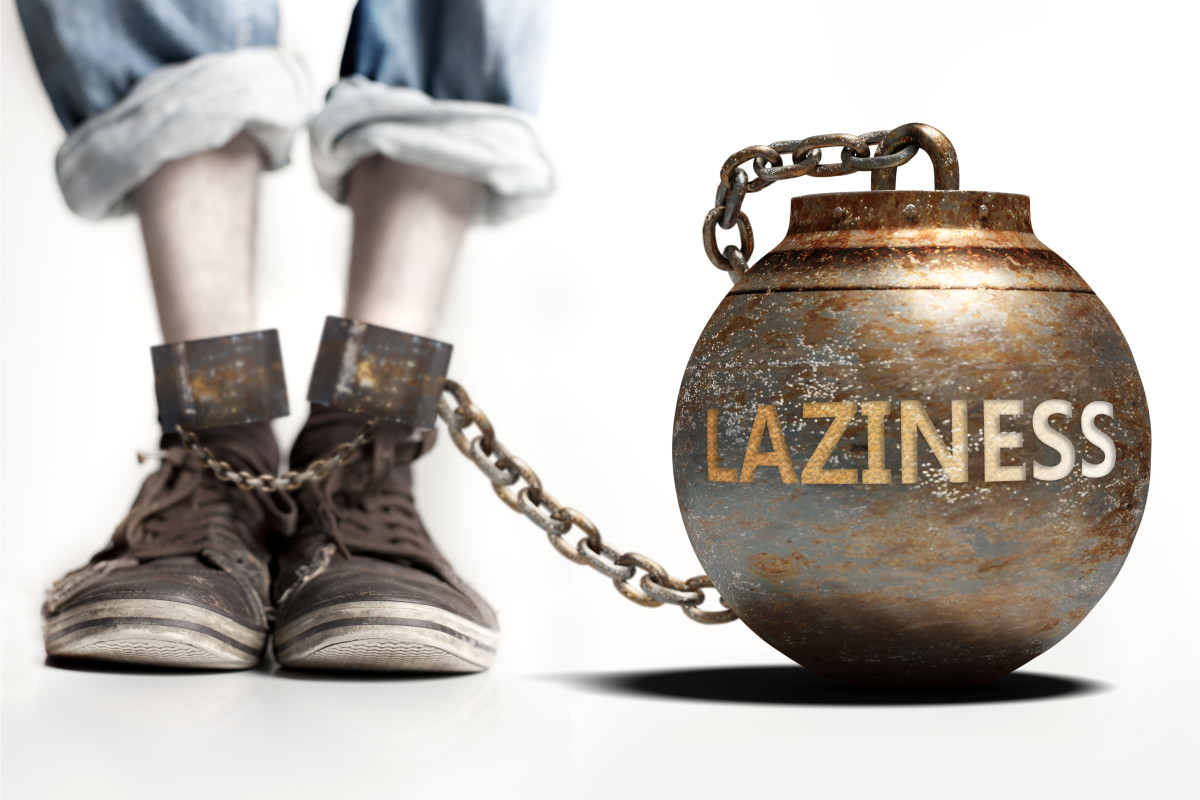
Let’s clear up some common misconceptions about detraining. First off, detraining is not a result of laziness or a lack of motivation. It’s a natural process that occurs when you stop or reduce your training. It’s not a reflection of your work ethic or dedication to your sport. So, stop beating yourself up over it.
Another misconception is that detraining leads to a complete loss of fitness gains. This is simply not true. Detraining is a gradual process, and fitness gains can be maintained with minimal training. In fact, taking a break can sometimes be beneficial, allowing your body to rest and recover, which can help prevent overtraining and injury.
Finally, some people believe that detraining results in a permanent loss of fitness gains. Again, this is a myth. Research has shown that fitness gains can be regained quickly with consistent training.
Studies have shown that athletes can regain their previous fitness levels within a few weeks of resumed training. So, even if you’ve taken a break, don’t despair. Get back on track, and you’ll be back to your peak performance in no time.
By understanding the science behind detraining and implementing effective strategies, you can overcome the challenges and continue to achieve your fitness goals. Remember, it’s not about being perfect; it’s about being persistent. Keep pushing forward, and you’ll see the results.
The Takeaway: Detraining & Training Cessation

Here’s the takeaway my dude, go be a motherfucking savage in the gym. Or if you are really that uncomfortable in public…
Then workout at home. I’m here to get you to realize that half of detraining is on you.
Why am I calling you out so much? Because I genuinely believe the reason for everyone being depressed nowadays is a lack of inaction in their health.
Health is wealth my friend. I want you to succeed. So do yourself the favor of switching detraining to optimal training performance, especially if you’re an athlete.
If you want to work with me one-on-one, schedule your fitness consultation here. It’s not free my friend. So unless you’re ready to invest in yourself, I encourage you to go through that weekly weightlifting program.
Feel comfortable to comment down below and you can always email me at AdamSkoda@MasculineMindsetCoach.com with questions and concerns.
You’re a legendary action-taker in a world of talkers. I’ll see you next time!
